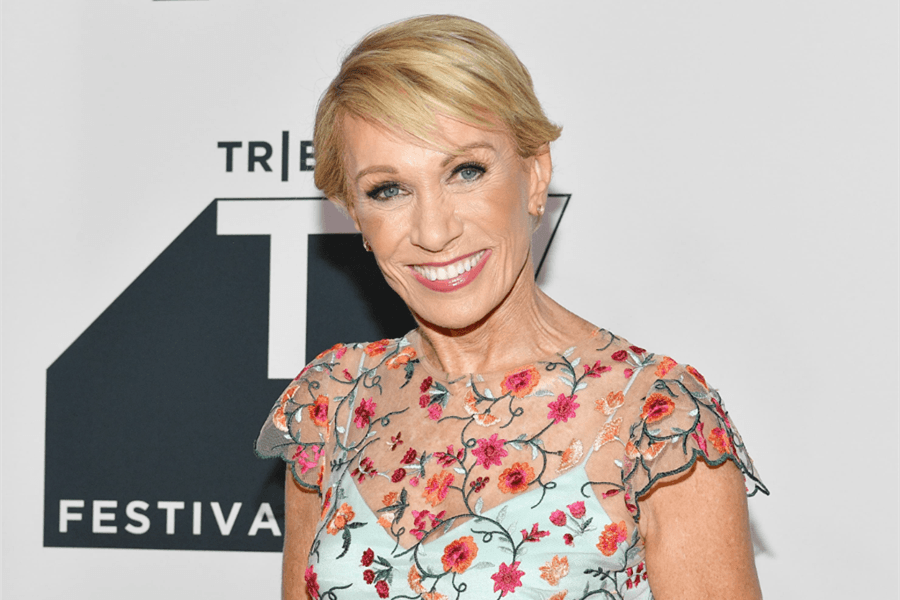
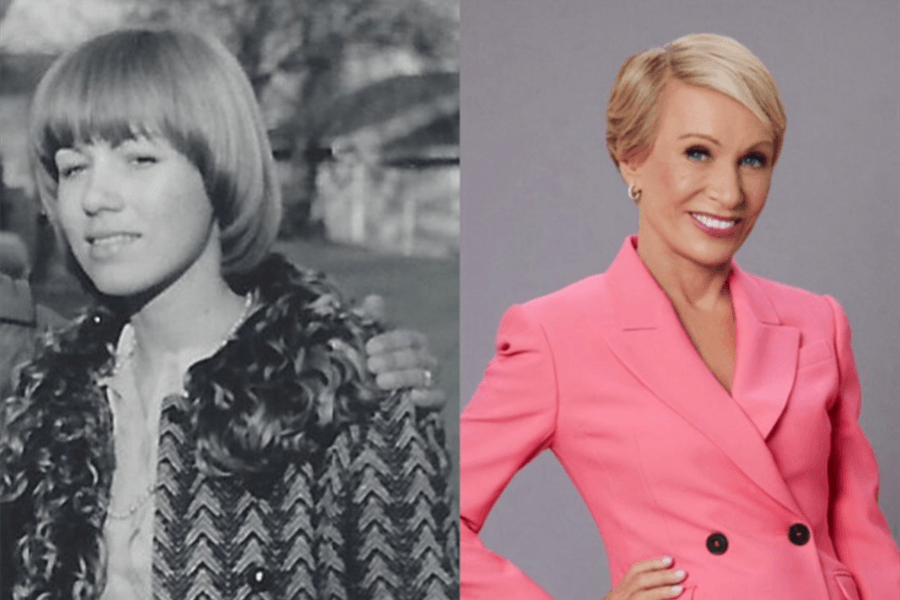
Barbara Corcoran’s net worth is estimated at $100 million — the accumulated result of one of the most straightforward wealth-building stories in American business. She borrowed $1,000 in 1973, built a real estate brokerage from scratch in one of the world’s most competitive property markets, sold it for $66 million in 2001, joined Shark Tank in its very first season in 2009, and turned a $50,000 investment in a wearable blanket company into $468 million. The numbers are large, but the arc is unusually clean: she made the most of every platform she was given, and she was given remarkable platforms.
That said, the $100 million figure is worth examining carefully. Given the scale of what she has generated — a $66 million business sale, an estimated $15 million-plus in Shark Tank appearance fees alone, and a portfolio of 80-plus companies — it is a number that reflects substantial reinvestment, ongoing philanthropy, and the lifestyle costs of four decades at the top of New York business rather than a simple accumulation of earnings.
Barbara Corcoran Net Worth at a Glance
Category
Detail
Estimated Net Worth
~$100 million (Celebrity Net Worth; consistent across Parade, Britannica, and major outlets, 2026)
Corcoran Group Sale
$66 million — sold to National Realty Trust (NRT), 2001
Shark Tank Tenure
Original Shark, Season 1 (2009) to present — Season 17 currently airing; est. $50,000 per episode
Best Shark Tank Deal
The Comfy — $50,000 for one-third stake (2017); generated est. $468 million for Corcoran before buyout
Total Shark Tank Investment
Over $62 million invested across 124+ on-air deals; claims 80+ total investments including off-air
Main Income Sources
Shark Tank fees, Shark Tank portfolio returns, speaking engagements, books, media, real estate holdings
Known For
Founder of The Corcoran Group; original Shark on Shark Tank; The Comfy investment; Forefront Venture Partners
Real Estate
Park Avenue co-op ($3.5M, 2001); Fifth Avenue penthouse ($10M, 2015); California mobile home ($800K–$1M)
Last Updated
April 30, 2026
Estimate Type
Estimated
Confidence Level
High
Note
$100M consistent across Celebrity Net Worth, Parade, Britannica, and Sharktankblog. No public financial disclosure. The Comfy return ($468M) is the figure Corcoran herself has cited; exact personal take after buyout not disclosed.
Background: The Crowded House That Built the Work Ethic
Barbara Ann Corcoran was born on March 10, 1949, in Edgewater, New Jersey, the second of ten children in a working-class Irish-Catholic family. Her father worked as a printing-press foreman. The ten children shared two bedrooms; her parents slept on a couch in the living room. It was not a childhood that suggested a $100 million future, and Corcoran has never pretended otherwise.
She struggled academically from the start, earning poor grades and enduring the kind of classroom dismissal that tends to either break a person or harden their determination. She was later diagnosed with dyslexia — a diagnosis that arrived only in adulthood, long after teachers had already labelled her the “dumb kid.” She graduated from high school as a D student, completed a degree in education from St. Thomas Aquinas College in 1971, taught school briefly, and then cycled through twenty jobs by the time she was 23. One of those jobs was as a receptionist at a real estate firm, which turned out to be the one that mattered.
Her boyfriend at the time, Ramone Simone, loaned her $1,000 to start a small real estate office in Manhattan in 1973. They named it Corcoran-Simone and ran it together. In 1980, Simone told Corcoran he was going to marry her secretary. It was not a gentle ending, but it may have been the most consequential professional development of her career. Corcoran bought out the business, renamed it The Corcoran Group, and rebuilt it entirely on her own terms. The motivation that followed was, by her own account, partly competitive: she wanted to prove the people who dismissed her wrong. Whatever its source, it produced remarkable results.
Building The Corcoran Group: The Marketing Instinct That Made It Work
The Corcoran Group grew from a small Manhattan rental office into one of New York City’s most prominent residential real estate brokerages over roughly three decades. What distinguished it was less scale than visibility. Corcoran had an intuitive grasp of marketing at a time when the real estate industry was not especially sophisticated about it.
Her most durable early innovation was The Corcoran Report, a newsletter she began publishing in the mid-1970s to track pricing trends and market conditions in New York’s residential real estate market. At a time when this kind of data was not widely available to the general public, The Corcoran Report became a go-to resource for buyers, sellers, and journalists writing about the New York market. It gave the Corcoran Group a profile disproportionate to its size and established Corcoran herself as a credible market voice — which, in turn, attracted both clients and the kind of media attention that money cannot easily buy.
She also focused on selective recruitment and branding rather than simply competing on volume, which helped the firm maintain quality and reputation as it expanded. By the 1990s, the Corcoran Group was widely regarded as one of New York’s most prestigious residential brokerages — not the largest, but one of the most recognised. That positioning made the 2001 sale at $66 million both plausible and well-timed: it came near the peak of the pre-dot-com correction real estate market, before the 2001 downtown disruptions that followed.
The $66 Million Sale and What Came After
In 2001, Corcoran sold The Corcoran Group to National Realty Trust (NRT) for $66 million. She was 52 years old. The sale was the most significant single financial event of her life prior to The Comfy — and, after taxes, represented the foundational capital of the $100 million net worth she holds today.
She exited the company shortly after the sale, which was a deliberate choice. Running the business she had built was no longer the point; the capital it had generated was the next platform. She began writing, speaking, and building what would become a media presence that eventually led to Shark Tank. The period between 2001 and 2009 was her apprenticeship as a public figure — one she appears to have approached with the same marketing discipline she had applied to the Corcoran Group.
“I’m no happier today than I was when I was dirt poor. You think something would have changed? No, I’m still insecure about the same things. I’m still nervous about the same things.” — Barbara Corcoran, to CNBC Make It
Shark Tank: Seventeen Seasons of Compounding Returns
Barbara Corcoran has been an original Shark on ABC’s Shark Tank since its first season in 2009. Season 17 is currently airing. No other original Shark has been present for every season; her longevity on the show is itself a commercial and financial achievement.
The financial mechanics of Shark Tank operate on two separate tracks that are worth distinguishing. The first is the appearance fee — reported at approximately $50,000 per episode in 2016, with estimates suggesting the current rate is higher. With over 300 episodes filmed across 17 seasons, Corcoran may have earned over $15 million from the show in appearance fees alone, not counting any deals made. The second track is the investment portfolio itself — Corcoran has reportedly put $62 million of her own money into 124 Shark Tank investments over the years.
Most Shark Tank investments do not return meaningful multiples. The economics of early-stage investing mean that a small number of portfolio companies generate the overwhelming majority of returns, while the majority return little or nothing. Corcoran has been candid about this: not every deal works, and the show’s editing creates an impression of uniform success that the actual portfolio does not consistently deliver. What Shark Tank does provide — beyond direct returns — is a continuous, curated pipeline of businesses that most investors would never encounter, plus the marketing amplification that comes when a Shark Tank appearance drives a brand into mainstream awareness.
The Comfy: The $50,000 Investment That Changed the Scale of Her Story
In 2017, during Season 9, brothers Brian and Michael Speciale pitched The Comfy — an oversized wearable blanket — on Shark Tank. Corcoran invested $50,000 for a one-third stake. The product, which retailed at a price point accessible to a mass consumer audience and had strong gift-purchase and repeat-purchase characteristics, became one of the most commercially successful products in Shark Tank’s history.
Corcoran has stated that The Comfy generated approximately $468 million for her since she acquired her stake in 2017, before she was subsequently bought out. The exact personal after-tax take from that return has not been publicly disclosed. What is documented is that a $50,000 investment generated returns of a scale that dwarfs the appearance fee income and rivals the Corcoran Group sale in its impact on her total net worth. It is, by any measure, one of the best individual investments made through the Shark Tank platform by any Shark across the show’s history.
Forefront Venture Partners and the Investment Portfolio
Beyond Shark Tank, Corcoran has formalised her investing activity through Forefront Venture Partners, formerly known as Barbara Corcoran Venture Partners. The firm focuses on high-growth, revenue-generating early-stage companies. It represents her attempt to build a more systematic investment operation beyond the reactive, television-driven deal flow of Shark Tank — though the two pipelines clearly feed each other.
Her broader portfolio includes companies such as Cousins Maine Lobster, Pipcorn, Daisy Cakes, and Coverplay — the last of which was her largest individual Shark Tank investment at $350,000 for a 40% stake. As of January 2023, she had made 130 deals on the show, the largest being a $350,000 investment for 40% of Coverplay. The performance of most of these investments is not publicly reported. The Comfy is the documented outlier; the majority of the portfolio’s returns, positive or otherwise, are private.
Books, Speaking, and the Media Career
Corcoran has authored three books: If You Don’t Have Big Breasts, Put Ribbons on Your Pigtails (2003), a business and life lessons memoir drawing heavily on her mother’s influence; Nextville: Amazing Places to Live the Rest of Your Life (2008); and Shark Tales: How I Turned $1,000 into a Billion Dollar Business (2011). She has written columns for Redbook, More, The Daily Review, and the New York Daily News, and has hosted multiple podcasts including 888-Barbara, Business Unusual with Barbara, and CNBC’s The Millionaire Broker with Barbara Corcoran.
Speaking fees for executives and public figures at her visibility level typically range from $50,000 to $100,000 per engagement. With the profile Shark Tank has given her — she is among the most recognisable faces on American business television — her speaking calendar is likely a consistent and meaningful income source, though specific figures are not publicly disclosed. She also competed on Dancing with the Stars Season 25 in 2017, becoming the first contestant eliminated alongside her partner Keo Motsepe.
Real Estate Holdings and Personal Life
Despite building her fortune on New York real estate, Corcoran’s personal property portfolio is notably more modest than many of her peers. She purchased a 2,700-square-foot apartment in a Park Avenue co-op for $3.5 million in 2001, and a penthouse unit on Fifth Avenue for $10 million in 2015. In 2017, she purchased a double-wide trailer home in California for $800,000 — a purchase she has described with characteristic straightforwardness as a deliberate choice to live differently from the standard wealthy New Yorker template. More recently she gave a tour of her $1 million Los Angeles mobile home in the Pacific Palisades, calling it her “Taj Mahal.”
She has been married to Bill Higgins, a retired U.S. Navy captain and former FBI agent, since 1988. Their son Tom was born in 1994 following IVF using an egg donated by her sister; the couple later adopted a daughter. Corcoran has been open about the IVF experience and the emotional complexity of building a family later in life, which has contributed to the personal accessibility that makes her a particularly effective television personality.
Why the $100 Million Figure Has Held Steady for Years
Corcoran’s net worth estimate has been broadly consistent at $100 million for several years, which — given the scale of what she continues to generate — is worth understanding rather than simply accepting. The stability likely reflects several factors working simultaneously.
First, Shark Tank investments are long-horizon illiquid assets. The $62 million she has invested across 124 deals is largely tied up in private companies whose value will not be realised until exits occur. Until those exits, the portfolio’s value is a paper estimate, not cash. Second, she is notably not a saver by temperament — unlike her fellow Sharks, she is famously not into the concept of saving money. Third, the $468 million Comfy figure she has cited publicly likely represents gross revenue generated by the company rather than her personal after-tax take from the stake buyout, which would be substantially lower. The $100 million figure, held stable across multiple credible sources, is the most defensible available estimate.
What Barbara Corcoran’s Financial Story Tells Us
Barbara Corcoran built her first $66 million from nothing but a borrowed thousand dollars, a city full of real estate, and an instinct for marketing that her academic record gave no indication she possessed. She built the second phase of her wealth — the Shark Tank portfolio, The Comfy, the speaking career, the media platform — from the credibility that the first phase created. Each chapter was built on the foundation of the last, which is perhaps the simplest and most replicable version of wealth accumulation that exists.
The dyslexia, the D grades, the twenty jobs, the boyfriend who left for her secretary — she has told all of it publicly, without editing the unflattering parts out. That transparency may partly explain why her story resonates as broadly as it does. At 77, with Season 17 of Shark Tank airing and Forefront Venture Partners active, the financial chapter is still open.
Frequently Asked Questions
What is Barbara Corcoran’s net worth in 2026?
Barbara Corcoran’s net worth is estimated at approximately $100 million in 2026, per Celebrity Net Worth and consistent with figures cited by Parade, Britannica, and Shark Tank Blog. The figure reflects accumulated wealth from the $66 million sale of The Corcoran Group in 2001, seventeen seasons of Shark Tank appearance fees, returns from her investment portfolio including The Comfy, speaking engagements, books, and real estate holdings.
How did Barbara Corcoran make her money?
Corcoran’s wealth was built across three distinct phases. First, she founded The Corcoran Group real estate brokerage with a $1,000 loan in 1973 and sold it to National Realty Trust for $66 million in 2001. Second, she joined Shark Tank as an original Shark in 2009, earning an estimated $50,000 per episode in appearance fees across 17 seasons and investing $62 million across 124-plus deals on the show. Third, her most lucrative single investment — a $50,000 stake in wearable blanket company The Comfy in 2017 — generated an estimated $468 million before she was bought out. Ongoing income comes from speaking engagements, books, media, and her Forefront Venture Partners investment firm.
What was Barbara Corcoran’s best Shark Tank investment?
The Comfy, a wearable blanket brand pitched by brothers Brian and Michael Speciale in Season 9 (2017). Corcoran invested $50,000 for a one-third stake. She has stated publicly that the investment generated approximately $468 million before she was subsequently bought out — making it one of the highest-return individual investments in Shark Tank’s history across any Shark. Her other notable investments include Cousins Maine Lobster, Pipcorn, Daisy Cakes, and Coverplay, the last of which was her largest single on-air investment at $350,000 for 40%.
How much does Barbara Corcoran earn per episode of Shark Tank?
Corcoran’s per-episode fee was reported at approximately $50,000 in 2016, per Variety. The current rate has not been publicly disclosed but is likely higher given the show’s longevity and her continued prominence as an original Shark. With over 300 episodes filmed across 17 seasons, her total appearance fee income from the show has been estimated at over $15 million before returns from any investments made on air.
Is Barbara Corcoran a billionaire?
No. Barbara Corcoran’s estimated net worth is $100 million — a significant figure, but well below the $1 billion threshold. She is the lowest net worth of the original Shark Tank Sharks: Robert Herjavec is estimated at $600 million, Daymond John at $350 million, and Kevin O’Leary at $400 million. Mark Cuban, who joined in Season 2, is a billionaire. Corcoran has addressed the comparison directly, noting that her personal happiness was not meaningfully different when she had far less.
All net worth figures are estimates based on publicly reported sources. Barbara Corcoran has not publicly confirmed a specific net worth.
Jean Sakamoto is the creator of Worthoria, a celebrity net worth site focused on clear, engaging articles about famous figures, their careers, income sources, and the stories behind how they built their wealth.