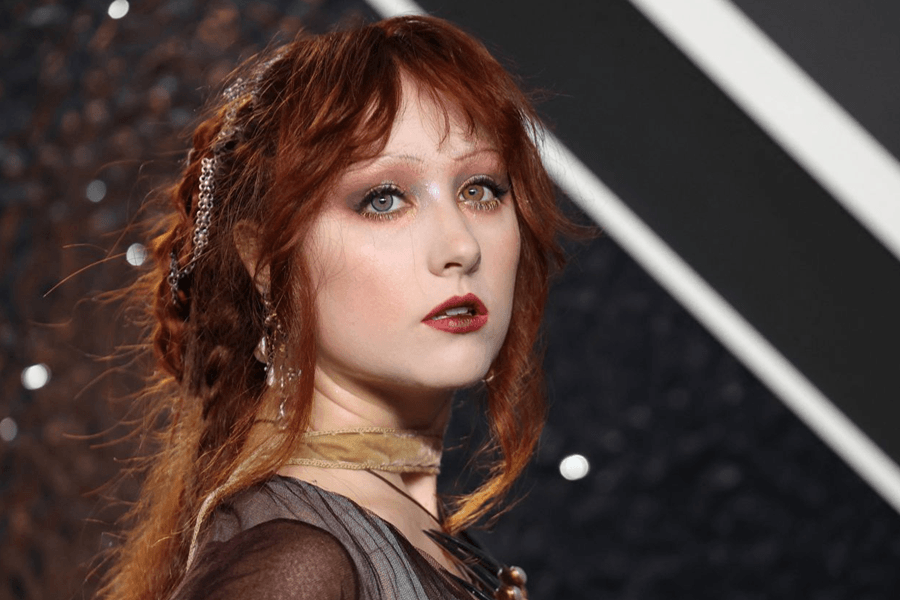
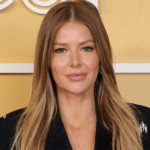
Chappell Roan’s net worth is estimated at $12 million. Nearly all of it was built in approximately 24 months. In early 2022, she was working as a barista at a donut shop in Missouri and as a production assistant in Los Angeles, continuing to write music after being dropped by her record label two years earlier. By February 2025, she had won the Grammy Award for Best New Artist. Between those two points: a debut album that built slowly then exploded, a quadruple-platinum single that reached number four on the Billboard Hot 100, touring that went from 2,000-seat venues to grossing $28.3 million across eleven headline shows in a single year, and a booking fee that tripled overnight after the Grammy win — from approximately $50,000 per show to over $150,000.
The financial arc of her career is arguably the most compressed major wealth accumulation in recent popular music. It is also, as she has said publicly in her own way, not only exciting. Fame at that speed and scale carries costs that she has discussed with unusual candour for someone who simultaneously embraces the platform it creates.
Chappell Roan Net Worth at a Glance
Category
Detail
Estimated Net Worth
~$12 million (Celebrity Net Worth, April 2026); other credible sources cite $10–12M
Real Name
Kayleigh Rose Amstutz
Born
February 19, 1998, Willard, Missouri
Stage Name Origin
“Chappell” — from mother’s maiden name/grandfather Dennis K. Chappell (died of brain cancer); “Roan” — from “The Strawberry Roan,” a Western ballad he loved
Grammy
Best New Artist, 67th Grammy Awards, February 2, 2025
6 billion+ global streams (Spotify + YouTube); 14 million+ songs sold in US
MAC Cosmetics deal
Named Global Brand Ambassador late 2025; multi-year deal est. $1–2M/year; launching fully 2026
Brand deal approach
Deliberately selective — rejects most endorsement offers; maintains authenticity as commercial principle
Last Updated
May 6, 2026
Estimate Type
Estimated
Confidence Level
Medium
Note
$12M is Celebrity Net Worth’s April 2026 figure; TheRichest and SocialLife Magazine cite $10M. The range reflects genuine uncertainty around the precise composition of touring revenue (before expenses), streaming royalty splits, and future contract values. The 24-month wealth accumulation is exceptionally rapid by any standard.
Background: Willard, Missouri, a Grandfather’s Name, and a YouTube Video at 16
Chappell Roan was born Kayleigh Rose Amstutz on February 19, 1998, in Willard, Missouri — a small city in the Ozarks region, population roughly 5,000, approximately 15 miles northeast of Springfield. Her mother, Kara, née Chappell, was a veterinarian; her father, Dwight Amstutz, a retired Naval Reservist who managed the family’s veterinary practice. She grew up in the religious Christian household typical of small-town Missouri — a context that would later inform the emotional terrain of her music, which is substantially about navigating identity in an environment not built to accommodate it.
She began playing piano at ten, took formal lessons at twelve, and started uploading original music and covers to YouTube in 2013. At approximately fourteen, she auditioned for America’s Got Talent and was rejected. In 2014, she posted an original song called “Die Young” to YouTube, and it attracted the attention of Atlantic Records. She was signed in 2015, at seventeen, while still in high school. Around this time she adopted her stage name: “Chappell” came partly from her mother’s maiden name and was also chosen to honour her grandfather, Dennis K. Chappell, who had died of brain cancer. “Roan” referenced “The Strawberry Roan,” a traditional Western ballad he had loved. She carried two people into her professional identity with the name — and in doing so, created one of the more specifically meaningful stage names in contemporary pop.
The Atlantic Years, the Label Drop, and the Donut Shop
In 2017, Roan released her debut EP “School Nights” on Atlantic Records — a moody, piano-driven collection that reflected the style she had developed as a teenager but did not generate the commercial traction the label required. She moved to Los Angeles in 2018, began living openly as a queer woman, and toured with English artist Declan McKenna, finding audiences that responded to her in ways the Atlantic promotion machinery had not fully unlocked. None of it was enough to prevent what came next.
In 2020, Atlantic Records dropped her. Being dropped by a major label at 22 means more than losing a contract — it typically means losing the team, the promotion budget, the booking relationships, and the infrastructure that had been doing the work of making her professionally functional. She returned to Missouri. She worked as a waitress. She worked at a donut shop. She continued writing music. In 2022, she returned to Los Angeles, working as a barista and as a production assistant while independently recording new material. The two-year period between the drop and the return was, by her own description, genuinely difficult — and it produced the artistic clarity that made everything that followed possible.
The Reinvention and the Record That Started Everything
The defining creative decision of Roan’s career happened during this independent period: she committed to a visual and sonic identity that was genuinely hers — theatrical, queer, camp-inflected, Midwestern in its emotional honesty and drag-informed in its aesthetic vocabulary. Her drag alter ego, Chapel, emerged as the visual anchor of the persona. “Pink Pony Club,” released in 2022 — a song about a small-town girl becoming a drag club dancer, produced with Dan Nigro — became a slow-building anthem in LGBTQ+ communities that established her as a genuine presence in that cultural space before she had a mainstream commercial profile.
In 2022 she signed a publishing deal with Sony Music and was chosen to open for Olivia Rodrigo’s SOUR Tour — exposure to audiences numbered in tens of thousands per night that transformed her from a cult artist into a nationally known one. In September 2023, she signed with Amusement Records, an Island Records imprint, and released “The Rise and Fall of a Midwest Princess” — a debut album that arrived fully formed, with the theatrical coherence and emotional range of an artist who had been building toward this for a decade.
The album built slowly through late 2023 and early 2024, gathering momentum as streams accumulated and fan communities discovered it organically. Then “Good Luck, Babe!” came out in April 2024.
The Financial Turning Point: “Good Luck, Babe!” and the 2024 Explosion
“Good Luck, Babe!” peaked at number four on the Billboard Hot 100, earned four platinum certifications from the RIAA, became a top-five single in multiple countries, and was played 6 billion times globally across streaming platforms and YouTube in the window between its April 2024 release and 2026. The song’s success opened the floodgates for the entire album — tracks that had been gradually accumulating streams became part of a cultural conversation at a scale that individual music industry momentum cannot manufacture.
Roan headlined festivals including Coachella and Glastonbury in 2024. Her touring went from the 2,000-seat venues of the 2023 “Naked in North America” run to sold-out headline shows generating an average of over $89,000 per performance on the Midwest Princess Tour — which spanned 94 dates across six tour legs. Her personal take-home from streaming revenue in the 2024–2026 period, after label and publishing cuts and management fees, has been estimated at $3.5–4.5 million.
Year
Career event
Financial significance
2020
Dropped by Atlantic Records; returns to Missouri
Near-zero earnings; works food service jobs
2022
“Pink Pony Club” builds LGBTQ+ following; opens for Olivia Rodrigo SOUR Tour
Booking value begins; Sony publishing deal signed
Sep 2023
The Rise and Fall of a Midwest Princess released on Island Records
Coachella, Glastonbury headline sets; Midwest Princess Tour
94 dates; avg. $89K/show gross; millions in touring income
Feb 2025
Wins Grammy for Best New Artist
Booking fee: $50K → $150K+/show overnight
2025
11 headline shows
$28.3 million gross; 276,000 tickets
Late 2025
MAC Cosmetics Global Brand Ambassador announced
$1–2M/year multi-year deal; launching fully 2026
The Grammy and the Booking Fee That Changed in a Night
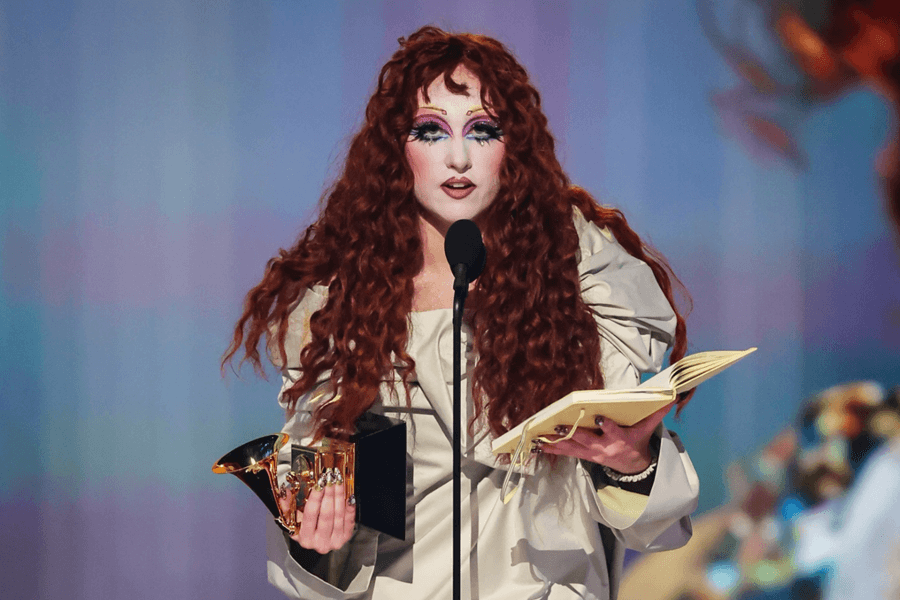
On February 2, 2025, Roan won the Grammy Award for Best New Artist at the 67th Grammy Awards. She beat a field that included Sabrina Carpenter, Benson Boone, Teddy Swims, and Shaboozey — all of whom had commercially significant 2024 profiles. Her acceptance speech was widely discussed both for its emotional content and its political commentary; she used the platform to directly address the incoming administration on LGBTQ+ issues.
“I just want to say to my queer community, I would never stand here if it wasn’t for you. You raised me up. I love you so much.” — Chappell Roan, Grammy acceptance speech, February 2025
The Grammy win had an immediate and quantifiable commercial effect. Her per-show booking fee approximately tripled: from around $50,000 before the win to over $150,000 afterward, per industry estimates. That is not a metaphorical shift — it is a specific dollar-per-appearance change that, compounded across a touring schedule of 20 or more shows per year, represents millions of additional dollars annually. The eleven headline shows in 2025 that grossed $28.3 million in aggregate reflect this post-Grammy pricing alongside her elevated commercial standing.
Roan is notable for what she has declined as much as what she has accepted. In an era where fellow Gen Z artists stack partnerships across consumer goods, fragrance, food service, and wellness — treating the endorsement portfolio as a parallel income stream running alongside music — she has maintained a deliberately minimal brand relationship footprint. This is not an accident and it is not modesty. It is a commercial strategy built on the premise that scarcity creates premium value: an artist who endorses everything is available to anyone; an artist who endorses almost nothing commands extraordinary rates when she does accept a partnership.
The MAC Cosmetics deal — announced in late 2025, launching fully in 2026 — is, by this logic, the correct exception to the selectivity principle. MAC is a professional-grade makeup brand whose identity is built on theatrical self-expression and the LGBTQ+ community; it has been part of drag culture for decades and its artist-client history includes RuPaul, Lady Gaga, and countless performers in the camp aesthetic tradition that Roan’s entire visual identity draws from. The fit is genuine rather than calculated. The estimated $1–2 million annual deal value reflects both the strategic rarity of her accepting a partnership and the authentic brand alignment that makes it credible to her audience.
In early 2026, Roan left the Wasserman Talent Agency following controversies surrounding its founder. The management change is not a minor operational detail — talent agency relationships affect booking access, touring logistics, and brand partnership pipelines, and the transition, while its full implications are not yet clear, may influence the shape of her 2026–2028 commercial activity.
Mental Health, Fan Boundaries, and the Emotional Cost of Rapid Fame
Roan has spoken publicly and repeatedly about the emotional toll of her specific form of rapid fame — not in the abstract way that celebrities often discuss burnout, but in concrete terms about parasocial relationships, death threats from people who felt they owned personal access to her, and the psychological difficulty of having her entire public identity shift within 24 months. She set explicit public boundaries with her fanbase in 2024, telling fans in a widely shared post that they did not know her — they knew her art — and that treating those as the same thing was a boundary she would not accept.
The mental health dimension of her story is financially relevant not because it affects the net worth estimate but because it explains the selectivity that shapes her commercial decisions. She nearly cancelled tours during this period, and has been transparent about the sessions with therapists and the structural changes to how she engages with public life that allowed her to continue. The authenticity that makes her MAC deal commercially credible and her endorsement scarcity commercially valuable is not performance — it is the product of someone who genuinely decided what she was and was not willing to do for commercial purposes, and held the line.
Streaming, Certifications, and the Numbers
Across her catalogue, Roan has sold over 14 million songs in the United States and accumulated approximately 6 billion global streams across Spotify and YouTube. Nine of her fourteen released singles have earned RIAA certifications, combining for twelve platinum and three gold plaques — representing approximately 13.5 million certified song units sold in the US alone. “Good Luck, Babe!” leads with four platinum certifications; “Pink Pony Club” and “Red Wine Supernova” follow at two platinum each.
Industry analysis estimates the total gross streaming revenue generated by Roan’s catalogue at approximately $19.2 million — before label advances are recouped, before publishing splits, before management percentages, and before any label-artist revenue division under her Amusement Records deal. Her personal take-home from streaming in the 2024–2026 period, per one detailed industry breakdown, is estimated at $3.5–4.5 million. Platinum-certification bonuses from her recording contract provide additional lump-sum income events alongside the recurring streaming royalties.
Why the Net Worth Range Is $10–12 Million
Published estimates for Roan’s net worth in early 2026 converge on a $10–12 million range, with Celebrity Net Worth’s April 2026 update at $12 million representing the most recently updated authoritative figure. The range reflects genuine uncertainty around three variables: the precise touring net revenue after production, management, crew, and venue costs; the exact terms of her Island Records deal and how revenue from the album is divided between label and artist; and the full value of the MAC Cosmetics deal, which was announced but not fully deployed commercially as of the early 2026 period.
What all credible estimates agree on is the trajectory: from an estimated $500,000 or less at her June 2024 commercial breakout to $10–12 million in approximately 20 months. That velocity is, by most industry tracking, exceptional even within the Gen Z artist cohort where rapid rises are increasingly common.
What Chappell Roan’s Financial Story Tells Us
Chappell Roan’s $12 million net worth was built on the far side of a label drop, two years of food service work, and an independent creative period that produced the artistic clarity the major label infrastructure had not. Atlantic Records looked at her at 22 and decided she was not commercially viable. The Grammy voters looked at her at 26 and decided she was the best new artist in American music. The booking market tripled her per-show rate overnight.
The specific version of the artist reinvention story she represents — refusing to abandon the artistic identity that made her commercially unsuccessful the first time, and discovering it was commercially successful the second time at an order of magnitude larger than before — is the one that the music industry genuinely does not know how to predict. She was not inevitable. She was, until very recently, the opposite. The $12 million is the market’s assessment of what changed between those two moments. The music is the explanation.
Frequently Asked Questions
What is Chappell Roan’s net worth in 2026?
Chappell Roan’s net worth is estimated at approximately $12 million in 2026, per Celebrity Net Worth’s April 2026 update. TheRichest and SocialLife Magazine cite $10 million. The range reflects genuine uncertainty around touring net revenue, record deal terms, and brand deal values. Nearly all of her net worth was accumulated between mid-2024 and early 2026 — one of the most compressed major wealth accumulations in recent popular music, following her Grammy win for Best New Artist in February 2025 and the commercial success of “Good Luck, Babe!” and the Midwest Princess Tour.
How did Chappell Roan become famous?
Roan signed with Atlantic Records at 17 after a YouTube video attracted label attention, released her debut EP “School Nights” in 2017, and was dropped by the label in 2020 after it underperformed commercially. She worked as a barista at a donut shop and as a production assistant while continuing to write independently. “Pink Pony Club” (2022) built a cult following in LGBTQ+ communities; opening for Olivia Rodrigo’s SOUR Tour that year expanded her audience nationally. Her debut album “The Rise and Fall of a Midwest Princess” (Island Records, September 2023) built slowly, then “Good Luck, Babe!” (April 2024) peaked at #4 on the Billboard Hot 100 and made her one of the biggest names in pop music.
What Grammy did Chappell Roan win?
Roan won Best New Artist at the 67th Grammy Awards on February 2, 2025, beating a field that included Sabrina Carpenter, Benson Boone, Teddy Swims, and Shaboozey. Her acceptance speech included comments on LGBTQ+ rights directed at the incoming administration and a direct tribute to her queer community, which she described as having raised her up. The win immediately tripled her per-show booking fee from approximately $50,000 to over $150,000.
What is Chappell Roan’s real name?
Chappell Roan’s real name is Kayleigh Rose Amstutz. She adopted the stage name when she signed with Atlantic Records in 2015. “Chappell” came from her mother’s maiden name and was chosen specifically to honour her grandfather, Dennis K. Chappell, who had died of brain cancer. “Roan” referenced “The Strawberry Roan,” a traditional Western ballad her grandfather had loved. She named her stage persona after two people she had lost — her grandfather’s name, carried forward in public every time she performs.
Does Chappell Roan do endorsement deals?
Roan is deliberately selective about brand partnerships and has publicly declined the majority of endorsement opportunities that have come her way during her commercial peak. Her primary documented brand relationship is the MAC Cosmetics Global Brand Ambassador deal announced in late 2025 and launching fully in 2026, estimated at $1–2 million annually. The authentic fit between her theatrical makeup aesthetic and MAC’s identity in drag and camp culture is central to the partnership’s commercial logic. Her selectivity is both a personal values position and a commercial strategy: scarcity increases the premium value when she does accept a deal.
All net worth figures are estimates based on publicly reported sources. Chappell Roan has not publicly confirmed a specific net worth. Touring revenue figures are from Pollstar and industry tracking sources. Streaming revenue calculations are industry estimates based on certification data and platform metrics, not disclosed royalty statements.
Jean Sakamoto is the creator of Worthoria, a celebrity net worth site focused on clear, engaging articles about famous figures, their careers, income sources, and the stories behind how they built their wealth.