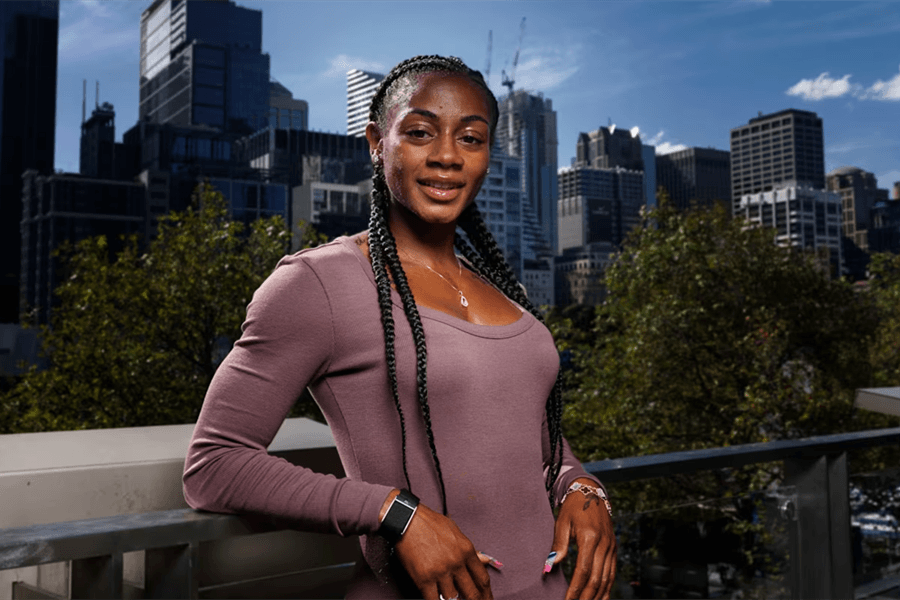
Sha’Carri Richardson’s net worth is estimated at $4 million — and the most instructive way to understand that number is to know what professional sprinting actually pays. Her direct annual earnings from track competition, including prize money and appearance fees, are estimated at $45,000 to $55,000 per year. At the 2024 Paris Olympics, where she won a silver medal in the 100 metres and a gold in the 4×100 relay, the USOPC paid her approximately $35,000 in medal bonuses. The $4 million net worth is not a product of the sport compensating her for what she has done. It is a product of endorsements, primarily a reported $20 million Nike deal, supplementing a sport that pays its fastest athletes a fraction of what their performance is commercially worth.
She is 25 years old. She broke the NCAA 100-metre record as an 18-year-old LSU freshman. She won the World Championship 100 metres at 23. She is among the ten fastest women in recorded history. And she earns approximately $50,000 per year from running itself. The gap between those two realities is the financial story.
Sha’Carri Richardson Net Worth at a Glance
Category
Detail
Estimated Net Worth
~$4 million (Celebrity Net Worth, 2026; Parade, 2026)
Annual competition earnings
$45,000–$55,000/year from race prize money and appearance fees
~$20 million over 5 years (~$4M/year) — widely reported, never officially confirmed
Other endorsement partners
Sprite, Beats by Dre, Olay, Oikos, Android, Apple Music, Powerade, SKIMS (Nike x Kim Kardashian)
Endorsement income (est.)
$1–2 million annually (Sportskeeda estimate); Nike deal potentially $4M/year if $20M deal confirmed
Known For
2023 World Championship 100m gold (10.65s, championship record); Paris 2024 silver (100m) + gold (4x100m relay); Tokyo 2021 suspension; bold personal style
Athletic records
NCAA 100m record (10.75s, 2019, LSU); World Championship record 100m (10.65s, 2023); 4x100m relay split 9.65s (fastest relay split in history, 2023)
Born
March 25, 2000, Dallas, Texas
Real Estate
$580,000 home in Clermont, Florida (2022); 2,461 sq ft; pool and spa
Notable honours
Forbes 30 Under 30 (2024); Sha’Carri Richardson Day declared in Dallas (November 10, 2023); Sha’Carri Richardson Track named at John Kincaide Stadium (2023)
Last Updated
May 5, 2026
Estimate Type
Estimated
Confidence Level
Medium
Note
$4M is Celebrity Net Worth’s 2026 figure, consistent with Parade and most 2025–2026 sources. Nike deal value is widely reported at $20M/5 years but has never been officially confirmed. Annual competition earnings of $45K–$55K per Celebrity Net Worth. Some sources range net worth from $3–5M.
Background: Dallas, Her Grandmother’s Nails, and the Speed That Arrived Early
Sha’Carri LaNay Richardson was born on March 25, 2000, in Dallas, Texas. Her biological parents were not present in her upbringing; she was raised by her grandmother, Betty Harp, and an aunt. Betty Harp wore long nails — a detail that Richardson has cited explicitly when asked about her signature long fingernails, which she maintains as an athlete and which have become one of the most discussed elements of her personal style. They are, in the most direct sense, a tribute carried on her hands to the woman who raised her.
She attended Carter High School in Dallas, where she won Texas state titles in both the 100 metres and 200 metres. In 2019, as an 18-year-old freshman at Louisiana State University, she ran 10.75 seconds in the 100 metres at the NCAA Division I Championships — breaking the collegiate record and making her, at 18, one of the ten fastest women in recorded history. The performance was not simply notable for its time. It was the kind of debut that announces a generational talent with an immediacy that the sport rarely provides: one run, one record, one number that changed the conversation.
She turned professional in 2019 and signed with Nike, beginning a commercial relationship that has become the primary financial engine of her career. Her early professional years — 2019 through 2021 — were the period in which her personal brand, characterised by her colourful wigs, bold fashion, and the Florence Griffith-Joyner comparisons that her style and speed both invited, began generating the endorsement market that her competition earnings alone could never have created.
The Athletic Record: World-Class Speed, Modestly Compensated
In April 2021, Richardson ran a personal best of 10.72 seconds in the 100 metres — making her the sixth-fastest woman in history at that time and the fourth-fastest American woman ever recorded. She qualified for the Tokyo Olympics by winning the US Olympic Trials 100-metre final at 10.86 seconds. Three months later, she was not at the Games.
At the 2023 World Athletics Championships in Budapest, she delivered what is likely the single most significant performance of her career to date. She won the 100-metre final in 10.65 seconds — a new championship record, defeating Shericka Jackson and Shelly-Ann Fraser-Pryce. She then ran the fastest individual relay split in history — 9.65 seconds — as part of Team USA’s gold-medal 4×100 relay, setting a championship record of 41.03 seconds alongside Tamari Davis, Twanisha Terry, and Gabrielle Thomas. The double gold, the individual championship record, and a relay split that had never been run faster by anyone in history placed her performance beyond any reasonable debate about her standing.
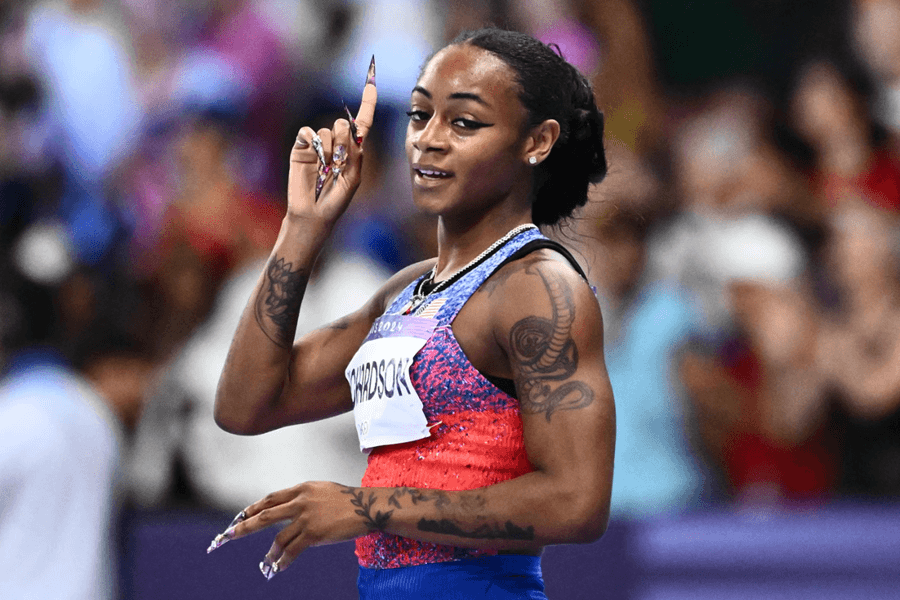
At the 2024 Paris Olympics, she won the silver medal in the individual 100 metres and the gold medal in the 4×100 relay. The total prize money those results generated from the USOPC — $22,500 for the silver, approximately $12,500 for her relay gold share — was approximately $35,000. She is among the fastest humans alive. The sport paid her $35,000 for that Olympic performance.
“I’m not back, I’m better. My talent has always been what it was, if not better. I’m still the same girl, but I’m a better woman.” — Sha’Carri Richardson, Nike Women Zine, 2024
The Toyota Suspension: What Actually Happened in 2021
The facts of the Tokyo suspension are worth stating precisely, because they have been variously mischaracterised in both directions. In June 2021, Richardson won the 100-metre final at the US Olympic Trials, qualifying for the Tokyo Games. On July 1, it was reported that she had tested positive for THC — the psychoactive compound in cannabis — in her post-race test. The result invalidated her Trials win and rendered her ineligible to compete in the individual 100 metres at Tokyo. She was also removed from the relay team, though that decision was at the discretion of USA Track and Field rather than required by the testing rules.
Richardson acknowledged the test result publicly and accepted the suspension. She disclosed that she had been in Oregon — where cannabis is legal under state law — and had used it after learning while there that her biological mother had died. She described it as a coping mechanism in a moment of acute grief. The WADA rules under which she was suspended do not distinguish between legal and illegal jurisdictions of use; cannabis remains a banned substance in competition regardless of where it is consumed. The rule applied to her applied to all athletes.
Her willingness to address the situation directly — acknowledging the positive test, explaining the context, accepting the sanction without public dispute — and then returning to competition and winning the World Championship title two years later is the full arc of that chapter. Both parts belong in the account.
The Nike Deal and the Endorsement Portfolio
Richardson has been a Nike athlete since turning professional in 2019. The deal’s reported value — $20 million over five years, approximately $4 million annually — has circulated across multiple major sports business publications and has not been officially confirmed by either party. What is confirmed is the depth of the commercial relationship: she has appeared in major Nike global campaigns, served as the face of the Nike x Jacquemus Spring 2024 collaborative collection with French fashion designer Simon Porte Jacquemus, and been prominently featured across Nike’s women’s athletics marketing in the lead-up to and aftermath of both the 2023 World Championships and the Paris 2024 Olympics.
Beyond Nike, her endorsement portfolio includes Sprite, Beats by Dre, Olay, Oikos (Greek yogurt), Android, Apple Music, Powerade, and a collaboration in the Nike x SKIMS launch with Kim Kardashian’s brand. Her style — described by marketing analysts as “a brand’s dream” for its visual distinctiveness and immediate recognisability — creates a specific endorsement value proposition that most elite track athletes do not command. She is identifiable in a way that most sprinters are not; the wigs, the nails, the runway-influenced aesthetics, and the self-confidence that translate through both still photography and broadcast coverage make her commercially useful to brands beyond the narrow sports category.
Celebrity Net Worth estimates her total endorsement income at $1–2 million annually as a baseline figure. The $20 million Nike deal, if taken at face value, would push that to $4–6 million annually during its term — which would make endorsements approximately 80–100 times larger than her direct competition earnings. That ratio is not unusual for Olympic sprint athletes at the top of the commercial market. It is simply rarely stated this clearly.
The 2025 Seattle Incident
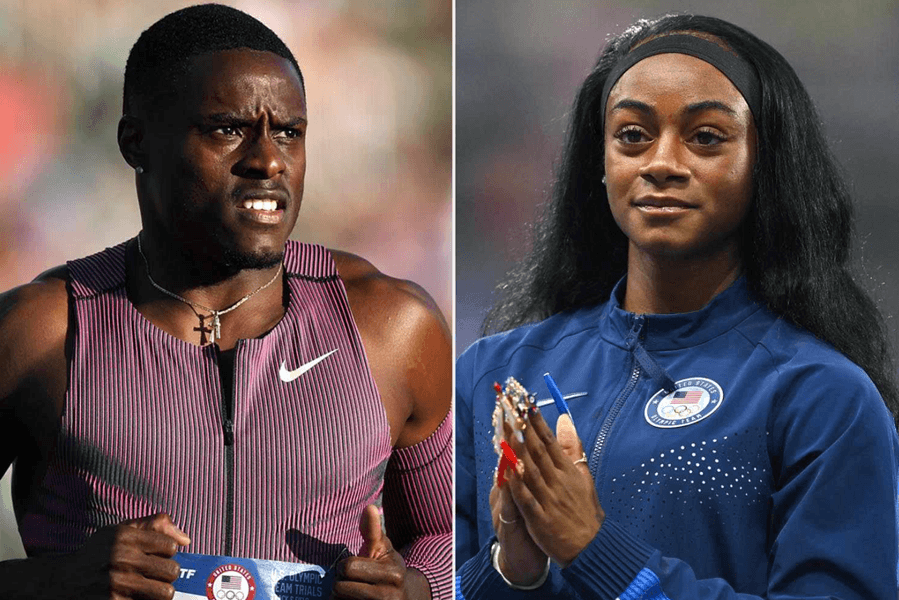
In July 2025, Richardson and sprinter Christian Coleman — her confirmed partner — were involved in an altercation at Seattle-Tacoma International Airport. Richardson was arrested. The charge classification in the arrest report was fourth-degree domestic violence, a misdemeanour under Washington state law. No charges were subsequently filed by prosecutors. Coleman was not arrested. Both parties declined detailed public comment. The incident was reported across sports media and generated significant public attention, partly because of the couple’s combined public profile in track and field.
The arrest is a documented public record. The absence of charges means no legal determination of wrongdoing was made. This article presents the documented facts — arrest, charge classification, no charges filed — and does not draw conclusions beyond them.
The Flo-Jo comparisons that Richardson attracts are not merely aesthetic. Florence Griffith-Joyner — the 1988 Olympic champion whose records in the 100 and 200 metres still stand — was remarkable not only for her speed but for the fashion and persona she brought to a sport that had not previously expected or encouraged either. Griffith-Joyner made track and field commercially interesting to audiences who would not otherwise have been watching. Richardson occupies a similar structural position: her speed is the credential, but her persona is the product that brands buy.
She wears long nails in every race — a deliberate tribute to her grandmother — in a sport whose coaches and officials have historically discouraged aesthetic departures from competitive convention. She changes her wig colour the way other athletes change their kit. She has brought genuine fashion industry attention to track and field, including the Jacquemus collaboration and broader luxury brand adjacency that most sprint athletes never access. Her openly bisexual identity, her willingness to discuss her personal history publicly, and her direct communication style all contribute to an authenticity that marketing strategists describe, in the language of brand valuation, as “real.” For endorsement purposes, real is extremely valuable.
What Track and Field Actually Pays — and Why the Gap Matters
Track and field does not have a professional league structure with guaranteed contracts. Elite sprinters earn through a combination of prize money at major meets (Diamond League events pay top finishers in the range of $10,000–$50,000 per event), appearance fees for competing at invitational meets (elite athletes can earn $20,000–$100,000 per appearance at the right venue), and the annual USA Track and Field tiered funding programme, which pays top-ranked athletes modest stipends. The total, for athletes at Richardson’s level, is typically in the $45,000–$55,000 annual range from the sport itself.
For comparison: she ran 10.65 seconds at the 2023 World Championships to win the title — a performance with no peer in the history of that specific championship event — and the sport’s direct compensation for that achievement amounts to a fraction of what a single sponsored Instagram post from a mid-tier influencer would generate. The endorsement market exists, in part, because the sport’s own compensation structure creates a substantial gap that commercial partnerships are required to fill. Without Nike, without Sprite, without Olay, the most commercially recognisable sprinter of her generation would be earning approximately $50,000 per year from the thing she does better than almost any person alive.
Real Estate, Personal Life, and What Comes Next
In 2022, Richardson relocated from Dallas to Clermont, Florida, purchasing a $580,000 home featuring a pool, spa, and 2,461 square feet of space — a property she documented publicly on social media. The purchase reflects the lifestyle ambitions appropriate to her commercial success and the training environment advantages of Florida’s climate for year-round sprint preparation. Her vehicle collection includes a Mercedes-Benz valued at approximately $70,000.
She is openly bisexual — she publicly acknowledged this in 2021 following her Trials win — and is currently in a confirmed relationship with sprinter and World Champion Christian Coleman. On November 10, 2023, the city of Dallas declared Sha’Carri Richardson Day. In 2023, a track at John Kincaide Stadium was renamed in her honour. Forbes included her in its 30 Under 30 list in 2024. At 25, with her fastest competitive years likely still ahead, the $4 million net worth reflects where she is early in a career that has already broken records and generated institutional recognition beyond what most athletes her age have produced.
Why the $4 Million Figure Will Change
Several factors suggest the $4 million figure is a floor rather than a ceiling. The unconfirmed $20 million Nike deal, if applied over its five-year term, would generate $20 million in Nike income alone — substantially more than her current net worth. The Paris 2024 Games and the 2023 World Championship title together raised her endorsement leverage for the cycle leading to the 2028 Los Angeles Olympics, at which home-Games premium rates will likely apply. The Los Angeles Games — held in a city where she trains, in a country where she is its most recognisable track athlete — will be the commercial peak of her career if her performance level holds.
Analysts quoted by Sportskeeda projected $3–5 million in new deals in the post-Paris period alone. Whether those projections materialise will depend on her continued competitive results, her health, and the endorsement market’s appetite for track and field personalities during the inter-Olympic cycle. What is not in doubt is that the structural elements supporting her commercial position — her performance record, her distinctive identity, her social media presence, and the 2028 Los Angeles Games on the horizon — are all pointing upward.
What Sha’Carri Richardson’s Financial Story Tells Us
Sha’Carri Richardson built $4 million in net worth through a sport that paid her approximately $50,000 per year to do it. That gap is not unique to her — it is the structural condition of Olympic track and field, in which the athletes who generate the most cultural value receive the most modest direct compensation, and endorsements are the market’s correction. What is specific to her is the degree to which her personal identity — the wigs, the nails, the fashion, the directness, the Florence Griffith-Joyner comparisons that are no longer analogies but genuine equivalences — created commercial value that most elite sprinters, however fast, cannot generate.
She is 25, coming off a World Championship title and an Olympic relay gold, heading toward the 2028 Los Angeles Games in her own country, with the most commercially valuable personal brand in track and field. The $4 million is where she is. It is almost certainly not where she will be when the Los Angeles cycle concludes.
Frequently Asked Questions
What is Sha’Carri Richardson’s net worth in 2026?
Sha’Carri Richardson’s net worth is estimated at approximately $4 million in 2026, per Celebrity Net Worth and Parade. Her direct annual earnings from track competition — prize money and appearance fees — are estimated at $45,000–$55,000 per year. The $4 million figure comes primarily from endorsements, led by a Nike deal reported at $20 million over five years (unconfirmed), alongside partnerships with Sprite, Beats by Dre, Olay, Oikos, Android, Apple Music, and Powerade.
Why was Sha’Carri Richardson suspended from the Tokyo Olympics?
Richardson tested positive for THC — the active compound in cannabis — following her 100-metre final at the 2021 US Olympic Trials, where she had qualified for the Games. She had used cannabis in Oregon, where it is legal under state law, after learning that her biological mother had died while she was there. She described it as a coping mechanism following the news. Under WADA rules, cannabis is a prohibited substance regardless of where it is legally consumed. She accepted the suspension and was ruled ineligible for the individual 100 metres at Tokyo; she was also removed from the relay team. She publicly acknowledged the test result and the circumstances without disputing the sanction.
What records does Sha’Carri Richardson hold?
Richardson broke the NCAA Division I 100-metre record as an LSU freshman in 2019, running 10.75 seconds. She won the 2023 World Athletics Championships 100-metre title in a championship record of 10.65 seconds, defeating Shericka Jackson and Shelly-Ann Fraser-Pryce. As part of Team USA’s 4×100 relay at the same championships, she ran what was then the fastest relay split in history — 9.65 seconds — as part of a championship-record team total of 41.03 seconds. At Paris 2024, she won a silver medal in the individual 100 metres and a gold in the 4×100 relay.
How much is Sha’Carri Richardson’s Nike deal?
Richardson’s Nike deal is widely reported across major sports business publications as worth approximately $20 million over five years — approximately $4 million annually. Neither Nike nor Richardson has officially confirmed this figure. What is confirmed is the depth of the commercial relationship: she has been the face of multiple major Nike global campaigns, served as the centrepiece of the Nike x Jacquemus Spring 2024 collection, and featured prominently in Nike’s women’s athletics marketing across the 2023 World Championships and Paris 2024 Olympic cycles.
Why does Sha’Carri Richardson wear long nails?
Richardson wears long nails in every competition as a direct tribute to her grandmother, Betty Harp, who raised her and who wore long nails throughout her life. She has cited this explicitly in interviews when asked about her signature appearance. The nails have become one of the most discussed elements of her public persona — along with her colourful wigs and fashion-forward style — and have contributed to the visual distinctiveness that gives her commercial value beyond her athletic performance alone.
All net worth figures are estimates based on publicly reported sources. Sha’Carri Richardson has not publicly confirmed a specific net worth. The Nike deal value is widely reported but has not been officially confirmed by either party. Competition earnings figures are per Celebrity Net Worth and industry estimates.
Jean Sakamoto is the creator of Worthoria, a celebrity net worth site focused on clear, engaging articles about famous figures, their careers, income sources, and the stories behind how they built their wealth.