Robert Irwin’s net worth is estimated at $5 million — and that figure, while accurate as a measure of his personal accumulated wealth, misses the larger financial picture almost entirely. He is 22 years old. He co-manages Australia Zoo, one of the world’s most commercially significant wildlife tourism operations on a 750-acre property in Queensland. He is the heir to a conservation estate that includes a 118,000-acre sanctuary and a 135,000-hectare wildlife reserve — land assets that are not counted in a personal net worth calculation but represent an extraordinary long-term financial position. He just won Dancing with the Stars, is hosting its spin-off, and has become one of the most recognisable wildlife personalities in the world at an age when most people are still in university.
The $5 million is what his personal earnings have produced so far. The full picture is considerably more interesting, and considerably more complicated — beginning with the fact that his father left almost nothing in cash when he died.
Robert Irwin Net Worth at a Glance
Category
Detail
Estimated Net Worth
~$5 million (Celebrity Net Worth, multiple outlets, 2026)
Born
December 1, 2003, Buderim, Queensland, Australia
Main Income Sources
Television hosting fees, brand deals, photography, Australia Zoo involvement, royalty trust income, speaking engagements, book royalties
Known For
Australia Zoo (co-manager); Crikey! It’s the Irwins (2018–2022); I’m a Celebrity…Get Me Out of Here! Australia (host); DWTS Season 34 winner (Nov 2025); wildlife photography; Zootopia 2
DWTS Achievement
Won Season 34 with Witney Carson, November 25, 2025; youngest ever male winner; first siblings (with Bindi) to both win the show
Family Conservation Estate
Australia Zoo (750 acres, Beerwah QLD); 118,000-acre Brigalow Belt sanctuary; 135,000-hectare Steve Irwin Wildlife Reserve (Cape York) — not personal liquid wealth
Steve Irwin Trust
10-year trust set up by Steve Irwin to direct royalties and likeness income to his children; ongoing background income stream
Notable Brand Deals
Bonds Australia “Made for Down Under” campaign; Tourism Australia ambassador; Zootopia 2 (Disney)
Photography
2020 Wildlife Photographer of the Year — People’s Choice Award; photography auctioned for conservation fundraising
Last Updated
April 30, 2026
Estimate Type
Estimated
Confidence Level
Medium
Note
$5M reflects personal earnings only. Family conservation assets — zoo, land reserves — are not included in net worth estimates but represent his long-term financial position. Steve Irwin’s life insurance was $200,000 at death; trust income directed to children is ongoing but amounts undisclosed.
Background: Growing Up Inside a Conservation Empire — With No Cash Safety Net
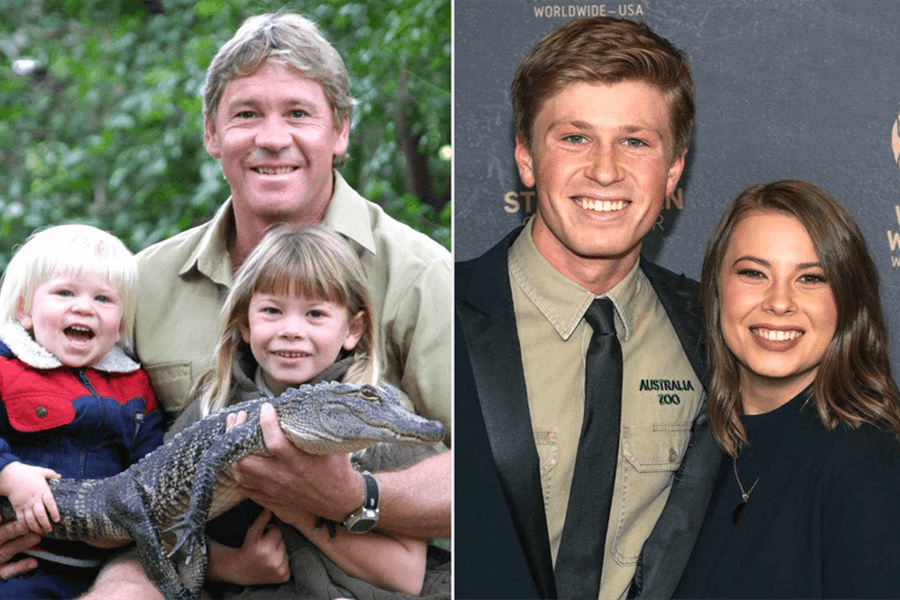
Robert Clarence Irwin was born on December 1, 2003, in Buderim, Queensland, to Steve and Terri Irwin — less than three years before his father’s death. Steve Irwin was killed on September 4, 2006, when a stingray barb pierced his heart while he was filming an underwater documentary at Batt Reef near Port Douglas. Robert was two years old. His clearest memory of his father is not from lived experience — it is from footage, photographs, and the family members who have spent two decades ensuring he understands who Steve was.
The financial reality that followed Steve’s death was significantly harder than the family’s public profile suggested it would be. In a July 2024 interview with the Australian Financial Review, Terri Irwin revealed that Steve had poured essentially everything he ever earned back into conservation projects and zoo maintenance. His life insurance policy was worth $200,000 — a figure Terri described as insufficient to cover even half a week’s zoo payroll. She described the family’s position as “precarious” in the immediate aftermath. She had to sell several non-essential properties at a loss — including a luxury waterfront home in Minyama offloaded at a $380,000 loss — to keep the zoo operational.
What Steve had done, in a more durable sense, was set up a 10-year trust ensuring that royalties and income from his likeness — the Crocodile Hunter brand, documentary footage, merchandise — would flow to his children over time. That trust, the underlying value of Australia Zoo, and the conservation land holdings he left behind were the real inheritance. None of it was cash. All of it required sustained work to maintain and develop. Robert grew up inside that reality, homeschooled at Australia Zoo and working with animals from childhood, understanding from an early age that the family’s wealth was inseparable from the mission that generated it.
The Irwin Name as a Financial Asset — and a Weight
Very few people inherit a brand as globally recognised as the Crocodile Hunter at age two. The name Steve Irwin still generates immediate emotional recognition across multiple generations, in dozens of countries, across every continent where wildlife conservation is discussed. That recognition is a commercial asset of genuine value — it opens television deals, brand partnership conversations, and conservation fundraising opportunities that would take most people decades to create from scratch.
It is also, by Robert’s own admission, a complex inheritance to carry. He has said publicly that growing up entirely in the public eye felt “weird,” and that the constant comparison to his father — in appearance, mannerisms, and passion — is emotionally layered in ways that are hard to fully articulate. He has navigated it by being genuine about the connection rather than performing it: he wears his father’s khaki uniform, uses his father’s vocabulary around wildlife (“crikey” is not an affectation), and speaks about Steve with the openness of someone who has thought about how to honour a person he barely knew in person but understands profoundly through his work.
Commercially, the strategy has been to earn the association rather than simply inherit it. His photography credentials are genuinely recognised — the 2020 Wildlife Photographer of the Year People’s Choice Award was not awarded because of his surname. His television presenting skills are his own. His DWTS win was earned over weeks of live performance. Each independent achievement adds a layer of personal credibility to a foundation that was built before he was born.
Television Career: From Wild But True to Dancing with the Stars
Robert’s television career began earlier than most — he appeared on screen with his parents before he could walk — but his independent presenting work started in earnest in 2014, when he co-hosted Wild But True, a Discovery Asia-Pacific science programme exploring biomimetics, which received a nomination at the International Emmy Kids Awards. Regular appearances on The Tonight Show Starring Jimmy Fallon from February 2017 onward introduced him to a US audience significantly larger than his existing Australian following, at a time when he was 13 years old.
Crikey! It’s the Irwins (Animal Planet, 2018–2022) was the show that established him as a television personality in his own right rather than simply Steve Irwin’s son making appearances. He co-produced the series alongside his mother and sister, covering daily life at Australia Zoo and the family’s conservation work. The show’s global distribution through Discovery/Animal Planet generated both appearance fees and significantly amplified tourist traffic to the zoo — a commercial effect that is difficult to separate from the personal income the show generated but that compounded its financial value considerably.
His current hosting role on I’m a Celebrity…Get Me Out of Here! Australia alongside Julia Morris has earned him Logie Award nominations for Most Popular Personality and Most Popular Presenter on Australian television. These are not minor recognitions — the Logies are the Australian television industry’s primary awards, and nominations in those categories confirm his standing as one of the country’s most commercially valuable on-screen personalities.
Dancing with the Stars: A Win That Changed His Global Profile
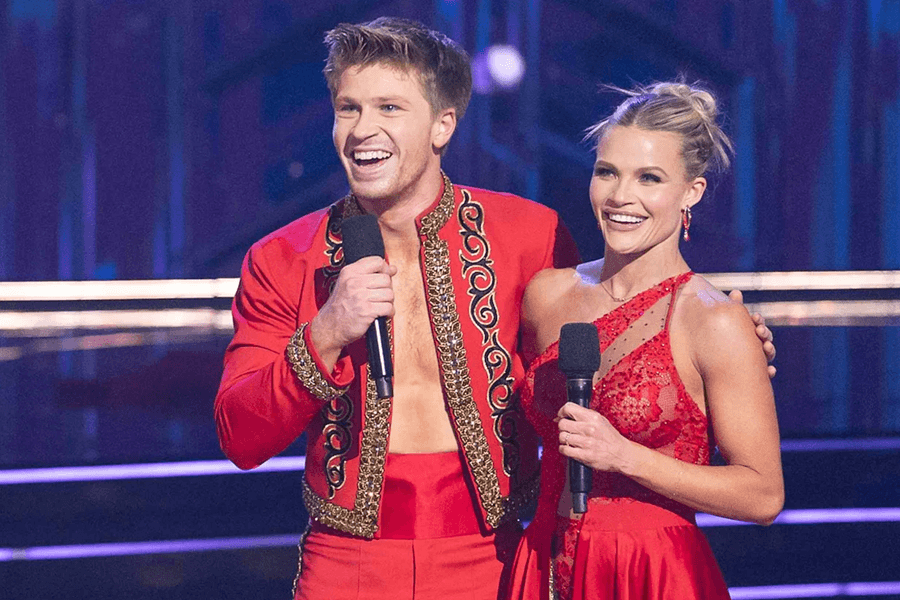
On November 25, 2025, Robert Irwin won Season 34 of Dancing with the Stars alongside professional partner Witney Carson. He became the youngest ever male winner in the show’s history — a record that, at 22, he holds comfortably. The win placed him in a category shared only by his sister Bindi: she won DWTS Season 21 in 2015, making them the first and only siblings to both take home the Mirrorball trophy.
“I never thought that I would be able to bring my message and what I stand for — which is wildlife conservation — to the world through a dancing show.” — Robert Irwin, on Not Gonna Lie with Kylie Kelce
The commercial value of a DWTS season extends well beyond the appearance fee. Per-contestant base fees are reported at $125,000 for the first two weeks, with finalists potentially earning $295,000–$400,000 total. More significantly for Robert’s longer-term financial trajectory, the win gave him sustained prime-time US network television exposure — 12 weeks of live performances in front of an audience of millions who may have known him only by name — that no amount of brand deal spending could have purchased. The subsequent announcement that he will host Dancing with the Stars: The Next Pro spin-off, premiering in July 2026, confirms that the network regarded his performance as commercially compelling enough to anchor an entirely new programme.
Robert’s brand partnership portfolio reflects the dual appeal of his public identity: the wildlife advocate whose values are genuine, and the young Australian personality whose mainstream television presence is growing rapidly. His Bonds Australia “Made for Down Under” campaign — an underwear brand campaign that went viral, notable because it placed a wildlife conservationist in a context most such advocates would not engage with — demonstrated a commercial flexibility that surprised some observers and significantly expanded his brand reach beyond conservation audiences.
He serves as a Tourism Australia ambassador, which leverages the unique combination of his family’s association with Australian wildlife and his growing international television profile. His voice role in Disney’s Zootopia 2 — as a koala airport receptionist — represents his feature film debut and a studio relationship that could open further opportunities.
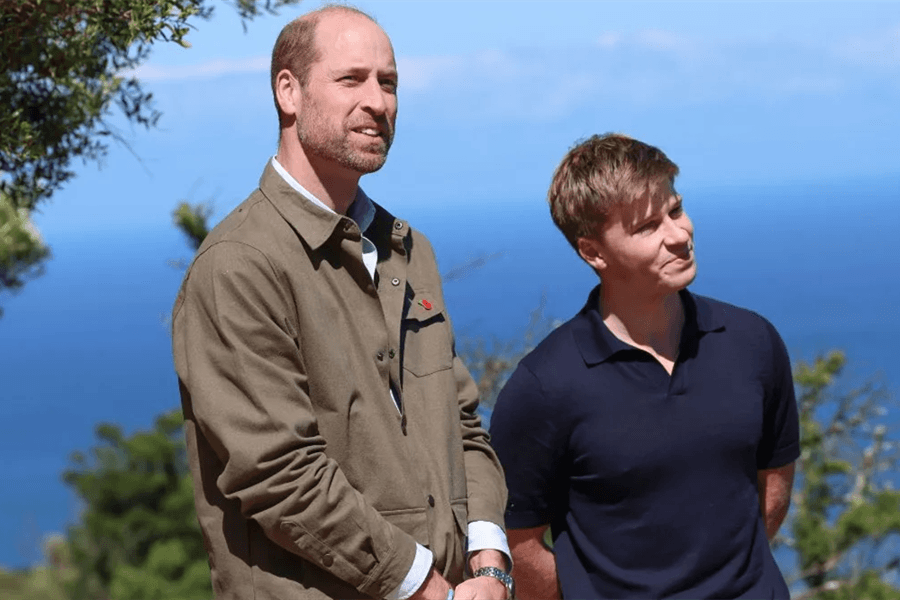
His wildlife photography is not a commercial side project — it is a credentialed professional practice. The 2020 Wildlife Photographer of the Year People’s Choice Award followed a career of serious competition work, and his photography has been exhibited, published, and auctioned in support of conservation fundraising. He also serves as an ambassador for Prince William’s Earthshot Prize, which connects him to some of the most significant institutional conservation funding in the world and reinforces the seriousness of his environmental credentials beyond entertainment.
Voice role — feature film fee; ongoing residual and promotional exposure
Wildlife photography
Auction income, licensing, exhibition appearances; primarily directed toward conservation but some personal income
Steve Irwin trust income
Ongoing — royalties and likeness income from Steve’s Crocodile Hunter catalogue; exact amounts undisclosed
Book royalties
Dinosaur Hunter series and other children’s titles — background recurring income
Speaking engagements
Conservation keynotes, zoo events, public appearances — e.g. Jacksonville Zoo and Gardens conservation gala
The Conservation Estate: What the Net Worth Figure Doesn’t Capture
This is the section that most net worth articles about Robert Irwin leave out, and it is arguably more important than the $5 million personal figure. The Irwin family’s conservation assets include Australia Zoo itself — 750 acres in Beerwah, Queensland, founded by Bob and Lyn Irwin in 1970 and one of Australia’s most visited wildlife tourism destinations — plus a 118,000-acre sanctuary in the Brigalow Belt and the 135,000-hectare Steve Irwin Wildlife Reserve on Cape York Peninsula.
Australia Zoo is not just a zoo. It is a major commercial tourism operation, a conservation research facility, a wildlife hospital, and the platform from which the entire Irwin brand operates. Its annual visitor numbers, operational revenue, and land value represent a financial asset of substantial size — though it is held by Terri Irwin as the primary owner following Steve’s death, not directly by Robert personally. The conservation land holdings are similarly not Robert’s personal assets in any liquid sense — they are conservation reserves that exist to be protected rather than sold or developed.
What they represent for Robert’s long-term financial position, however, is an inheritance of a different kind: operational stewardship of institutions whose combined value almost certainly exceeds the $5 million personal estimate by an order of magnitude, and whose continuation depends in large part on the family’s sustained public engagement — which Robert provides through every television appearance, brand deal, and photography auction. The personal net worth and the institutional legacy are inseparable in practice, even if the net worth figure treats them as separate.
Why the $5 Million Estimate Will Grow Quickly
Robert Irwin is 22 years old, has just won one of American television’s most-watched competition programmes, is hosting a major new network spin-off, and has a Disney film credit. His Australian television hosting career is established. His brand partnership portfolio is growing. The Steve Irwin trust income continues in the background. And the conservation brand he represents — carrying a name that generates genuine global emotional resonance — is if anything becoming more commercially valuable as wildlife conservation becomes a higher-priority issue for the brands and institutions that fund it.
The $5 million figure captures where he is at the very beginning of an adult career. It does not capture where the trajectory is pointing, or what the full financial picture looks like when the institutional assets are included alongside the personal ones.
What Robert Irwin’s Financial Story Tells Us
Robert Irwin’s net worth story begins with a family that had almost no cash when its most famous member died — a life insurance policy that couldn’t cover half a week’s zoo payroll — and a conservation empire that required sustained work to maintain. What the two decades since have produced is both a genuinely independent career for the youngest Irwin and the continuation of an institutional conservation legacy that was never primarily about money in the first place.
The $5 million personal figure is his own — earned through television, photography, brand deals, and the trust income his father had the foresight to establish. The zoo, the reserves, and the Crocodile Hunter brand are the larger inheritance, valued not in dollars but in the work required to keep them alive. At 22, he is managing both simultaneously, in public, with the kind of visible enthusiasm for the mission that makes the financial story feel secondary to the person telling it. Which is, almost certainly, exactly as his father would have wanted it.
Frequently Asked Questions
What is Robert Irwin’s net worth in 2026?
Robert Irwin’s net worth is estimated at approximately $5 million in 2026, per Celebrity Net Worth and consistent with multiple entertainment outlets. This figure reflects his personal earnings from television hosting, Dancing with the Stars, brand deals, photography, book royalties, and the Steve Irwin trust income his father established. It does not include the family’s conservation assets — Australia Zoo, the Brigalow Belt sanctuary, or the Steve Irwin Wildlife Reserve on Cape York — which are institutional holdings rather than personal liquid wealth.
Did Robert Irwin win Dancing with the Stars?
Yes. Robert Irwin won Season 34 of Dancing with the Stars with professional partner Witney Carson on November 25, 2025. He became the youngest ever male winner in the show’s history. He and his sister Bindi are the first and only siblings to both win the Mirrorball trophy — Bindi won Season 21 in 2015. He is now set to host the spin-off programme Dancing with the Stars: The Next Pro, premiering in July 2026.
What did Steve Irwin leave his children?
Steve Irwin’s death in 2006 left the family in a financially precarious position, as Terri Irwin revealed in a 2024 interview with the Australian Financial Review. His life insurance policy was worth $200,000 — insufficient to cover half a week of Australia Zoo’s payroll. He had poured his earnings into conservation and zoo maintenance rather than personal savings. He had, however, set up a 10-year trust to ensure royalties and income from his Crocodile Hunter likeness would flow to his children. Terri also retained the zoo and the family’s conservation land holdings, which she has since steadfastly maintained.
What is Robert Irwin’s role at Australia Zoo?
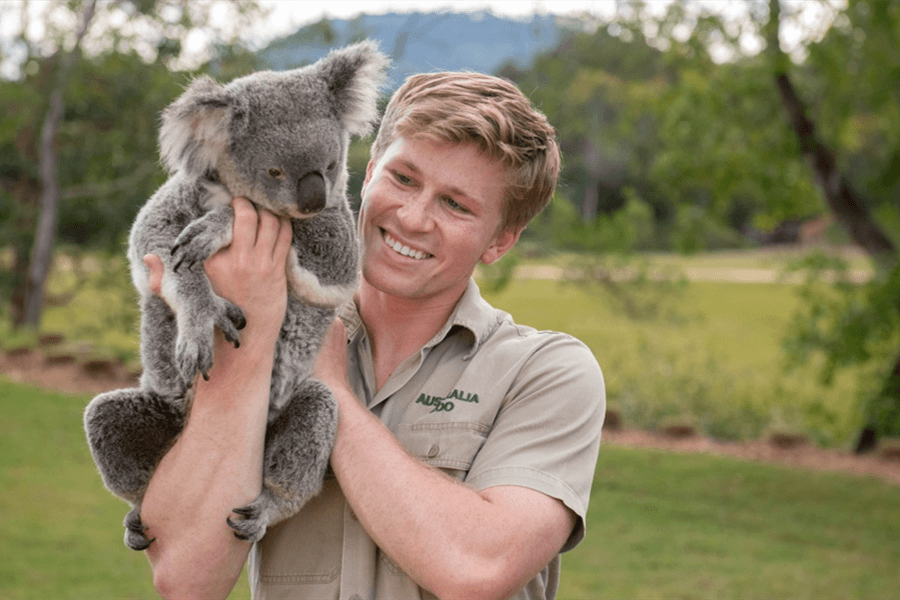
Robert Irwin co-manages Australia Zoo in Beerwah, Queensland — the 750-acre wildlife tourism and conservation facility founded by his grandfather Bob Irwin in 1970. He is actively involved in animal care, conservation initiatives, and zoo operations, working alongside his mother Terri Irwin. He regularly handles large saltwater crocodiles, snakes, and other animals in the zoo’s programmes, continuing the direct wildlife engagement that defined his father’s public identity.
What are Robert Irwin’s photography achievements?
Robert Irwin is a credentialed professional wildlife photographer who began taking photos at age six using a point-and-shoot camera and received his first DSLR — a Canon EOS 700D — as a child. He won the 2020 Wildlife Photographer of the Year People’s Choice Award. His work has been exhibited, published, and auctioned to raise funds for conservation. He was named junior runner-up in Australian Geographic’s 2016 Nature Photography of the Year competition at age 12. Photography remains a significant part of both his professional identity and his conservation advocacy.
All net worth figures are estimates based on publicly reported sources. Robert Irwin has not publicly confirmed a specific net worth.
Jean Sakamoto is the creator of Worthoria, a celebrity net worth site focused on clear, engaging articles about famous figures, their careers, income sources, and the stories behind how they built their wealth.