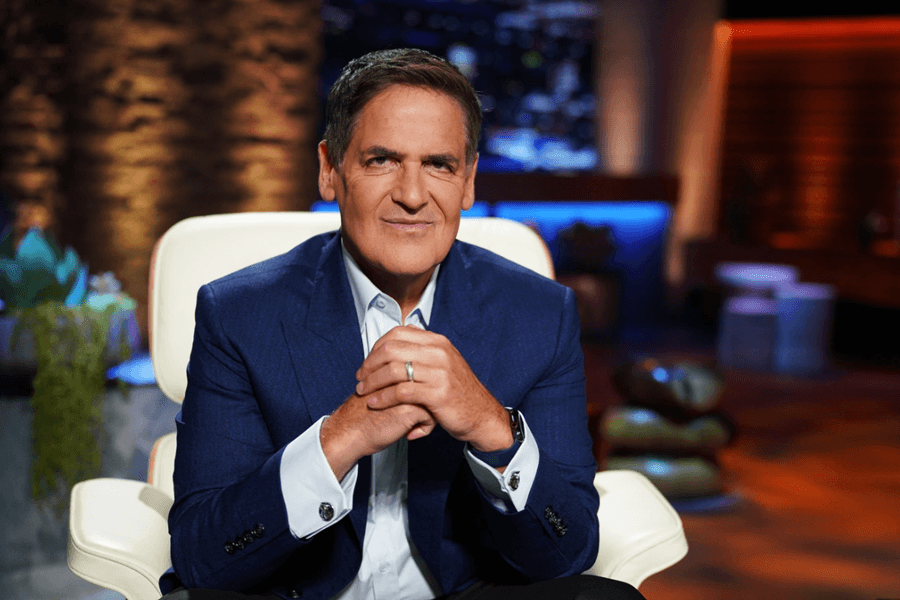
Mark Cuban’s net worth is estimated at $6 billion by Forbes as of January 2026. The number is the result of a career spanning more than four decades, a $285 million investment in the Dallas Mavericks that returned over $3.5 billion, a long run on Shark Tank, a new pharmaceutical company that may be his most important venture yet, and hundreds of startup investments — many of which failed. But the actual foundation of the $6 billion is a single financial decision made in 1999 that most people have never fully understood: after selling his company Broadcast.com to Yahoo for $5.7 billion at the height of the dot-com bubble, he used a sophisticated hedging strategy to lock in his gain before the crash. Yahoo’s stock fell more than 90% over the following two years. The hedge is why there is a $6 billion story to tell. Without it, the Broadcast.com exit — however fortuitously timed — would have been worth a fraction of what it became.
Mark Cuban Net Worth at a Glance
Category
Detail
Estimated Net Worth
~$6 billion (Forbes, January 2026); Celebrity Net Worth cites $6.5 billion; Bloomberg Billionaires Index: $5.7–6B range
Primary wealth source
Broadcast.com sale (1999) + Yahoo stock hedge; Dallas Mavericks ($285M → $3.5B); minority stake in Mavericks (27%)
MicroSolutions exit
Sold to CompuServe for ~$6 million (1990) — first liquidity event
Broadcast.com sale
Sold to Yahoo for $5.7 billion (1999); hedged Yahoo stock position through Goldman Sachs — protected ~$4B when Yahoo fell 90%+
Dallas Mavericks
Purchased January 2000 for $285 million; sold 73% stake December 2023 at $3.5B valuation; stated $3.5B personal gain; retains 27% stake (valued ~$4.46B per Forbes)
Cost Plus Drugs
Founded 2022; 6,000+ generic drugs at transparent prices; growing 30–40% monthly; early-stage valuation not disclosed
Shark Tank
Season 2 (2011) through Season 16 (2023); invested $19.6M–$61.9M across 85–204 deals depending on source/season; portfolio net loss by own admission (“I’ve gotten beat”)
Key business positions
27% Mavericks minority owner; Cost Plus Drugs co-founder; 2929 Entertainment; Harbinger Sports Partners Fund GP; 500+ startup investments
Born
July 31, 1958, Pittsburgh, Pennsylvania; raised Mount Lebanon (working-class suburb)
Real Estate
24,000 sq ft Dallas mansion; $19M Laguna Beach home (2018); Malibu home; Trump Tower NYC condo; Grand Cayman “Far Out” property; Mustang, Texas (entire town, $2M, 2021)
Last Updated
April 30, 2026
Estimate Type
Estimated
Confidence Level
High
Note
Forbes $6B and Celebrity Net Worth $6.5B are both defensible depending on Mavericks minority stake valuation date and private investment valuations. The $3.5B Mavericks sale proceeds figure was stated by Cuban publicly. Broadcast.com/Yahoo hedge structure is documented in financial accounts; exact collar strike prices not publicly confirmed. Shark Tank net loss is Cuban’s own public statement.
Background: Pittsburgh, a Grandfather’s Name, and Garbage Bags at Twelve
Mark Cuban was born on July 31, 1958, in Pittsburgh, Pennsylvania, the son of Norton Cuban, an automobile upholsterer, and Shirley Feldman Cuban. He grew up in Mount Lebanon, a suburb of Pittsburgh with a working-class character despite its proximity to the city’s more affluent neighborhoods. His paternal grandfather had immigrated from the Russian Empire — from territory that is now Ukraine — through Ellis Island, changing the family surname from “Chabenisky” to “Cuban” upon arrival. Cuban is Jewish, and has described the immigrant and working-class context of his upbringing as formative.
The entrepreneurial instinct appeared early and practically. At twelve, he sold garbage bags door to door to earn enough money to buy a pair of expensive basketball shoes. At sixteen, he exploited a newspaper strike at the Pittsburgh Post-Gazette by driving to Cleveland to pick up newspapers and selling them in Pittsburgh. He sold stamps and coins. He taught disco dancing lessons while at Indiana University, where he enrolled in 1977 after a brief stint at the University of Pittsburgh. He graduated in 1981 with a degree in business administration and moved to Dallas in 1982 — a city that would become the permanent geography of his career and fortune.
In Dallas he worked briefly as a bartender and as a salesperson for a software company called Your Business Software, from which he was fired after meeting with a client without his manager’s permission to close a sale. The firing may have been the most commercially productive termination in his career: he used the episode as the catalyst to found MicroSolutions, his first company, in 1983.
MicroSolutions and the First Exit
MicroSolutions was a computer integration and software services company — the kind of business that helped other businesses configure and integrate the information technology systems that were becoming essential in the mid-1980s. Cuban built it from nothing, often sleeping in the office, sharing a single apartment with six roommates to minimise costs, and, by his own account, learning the technical foundations of the technology he was selling through immersive personal study rather than formal training. The approach was characteristic: he identified what he did not know, learned it faster than the people who already knew it expected, and used the knowledge gap as a competitive advantage.
In 1990, he sold MicroSolutions to CompuServe — the internet company that would eventually become part of AOL — for approximately $6 million. After taxes, he cleared roughly $2 million. It was not a transformative exit by any subsequent standard of his career, but it established a pattern: build something, sell it before it gets complicated, take the money, and move on to the next thing. His next thing would be considerably larger.
Broadcast.com, Yahoo, and the Hedge That Made Everything Else Possible
In 1995, Cuban and his Indiana University friend Todd Wagner co-founded AudioNet — an early internet radio and streaming company that broadcast live radio stations, sporting events, and other audio content over the internet at a moment when most internet connections were too slow to do so reliably. They renamed it Broadcast.com and took it public in 1998. The IPO was one of the most successful in internet history up to that point: shares opened at $18 and closed at $62 on the first day of trading, giving the company a market capitalisation of approximately $1 billion on day one.
In 1999, Yahoo acquired Broadcast.com for $5.7 billion in Yahoo stock — one of the largest internet acquisitions of the dot-com era. Cuban and Wagner together received approximately $2 billion in Yahoo shares. It was, by any measure, a life-changing outcome. And it was received at one of the most precarious moments in American financial history: the peak of a stock market bubble that was about to collapse.
“The most important business decision I ever made was to hedge my Yahoo stock. Without that, none of this happens.” — Mark Cuban, various interviews
Cuban has described the hedge as the most important financial decision he ever made. The mechanics: he worked with Goldman Sachs to structure a collar option on his Yahoo position — a financial instrument that placed a cap on how much he could gain if Yahoo’s stock continued to rise but simultaneously placed a floor below which his losses could not fall, regardless of what Yahoo did. He locked in an estimated $4 billion in value from his Yahoo position. When the dot-com bubble collapsed in 2000 and Yahoo’s stock fell from over $100 per share to under $5 — a decline of more than 95% — his collar had already converted the paper gain into protected liquidity.
The hedge is not a footnote in Cuban’s biography. It is the foundational event of his wealth. Without it, his Yahoo shares would have been worth a fraction of what they were at peak, and the capital he needed to buy the Mavericks, fund MicroSolutions successors, and build the rest of the portfolio would not have existed. His willingness to accept a ceiling on his upside in exchange for a floor on his downside — at a moment when everyone around him was assuming Yahoo stock would only go higher — is the single most financially instructive decision in a career full of financially interesting ones.
The Dallas Mavericks: $285 Million In, $3.5 Billion Out
In January 2000, three months after the Yahoo acquisition and one month before the dot-com crash began in earnest, Cuban purchased a majority stake in the Dallas Mavericks NBA franchise from Ross Perot Jr. for $285 million. The Mavericks were a struggling franchise that had won 40% of their games over the previous two decades. Cuban immediately became the most visible and unconventional team owner in American professional sports — sitting courtside rather than in a skybox, wearing team jerseys, arguing with referees, accumulating fines from the NBA, and treating the franchise’s commercial operation as a startup problem to be solved rather than a legacy institution to be maintained.
The results justified the approach. The Mavericks made the playoffs 17 times under Cuban’s ownership, reached the NBA Finals in 2006 (losing to the Miami Heat), and won the 2011 NBA Championship — defeating the Miami Heat in six games, in one of the most celebrated upsets in recent NBA finals history. The franchise’s value grew from $285 million to over $4 billion over 23 years — an 1,100% return on his original investment.
In December 2023, the NBA approved the sale of a 73% controlling interest in the Mavericks to Miriam Adelson and her family — the heirs of Sheldon Adelson’s Las Vegas Sands casino empire — at a $3.5 billion valuation. Cuban retained a 27% minority stake and continued to oversee basketball operations. He has stated publicly that the sale generated approximately $3.5 billion for him personally. His retained 27% stake was valued by Forbes at approximately $4.46 billion as of December 2024, making the Mavericks investment — even the remaining portion he held — his single most valuable financial position.
In March 2026, on the Intersections podcast, Cuban addressed the sale candidly: “I don’t regret selling. I regret who I sold to. I made a lot of mistakes in the process, and I’ll leave it at that.” The remark generated significant media coverage and speculation about the Adelson family’s ownership of the franchise, without Cuban elaborating further on the specific grievances the statement implied.
The Wealth Table: How the $6 Billion Is Structured
Asset / Event
Structure
Estimated value / return
MicroSolutions sale (1990)
Cash
~$2M net after taxes
Broadcast.com/Yahoo (1999)
Yahoo stock + Goldman hedge
~$4B protected via collar options
Mavericks 73% sale (2023)
Cash/proceeds
~$3.5B stated by Cuban
Mavericks 27% remaining
Equity (illiquid)
~$4.46B Forbes valuation (Dec 2024) — paper, not liquid
Cost Plus Drugs
Equity in private company
Early-stage; valuation not disclosed; growing rapidly
Shark Tank portfolio
Equity in 85–200+ startups
Net loss by Cuban’s own admission (“I’ve gotten beat”)
Other venture investments
500+ deals via Mark Cuban Companies
Mixed; specific returns not publicly disclosed
Real estate
Multiple properties across US
Estimated $60–80M total across known holdings
The table illustrates the core tension in Cuban’s financial story: his largest single asset — the 27% Mavericks stake — is illiquid paper wealth that he could not liquidate without triggering NBA ownership approval processes, potential tax events, and a departure from the franchise that has defined his public identity for 25 years. The $6 billion net worth figure is real in the sense that the assets supporting it are real and valued at those levels. It is different from $6 billion in cash, and the distinction matters for understanding what the number actually represents.
Cost Plus Drugs: The Venture That May Define His Legacy
In 2022, Cuban co-founded the Mark Cuban Cost Plus Drugs Company with Dr. Alexander Oshmyansky with a specific and publicly stated mission: to make generic prescription drugs available at transparent, dramatically lower prices by eliminating the pharmacy benefit manager (PBM) intermediaries who absorb a significant share of the spread between drug manufacturers and end consumers. The company launched with approximately 100 generic drugs and has since expanded to over 6,000 medications.
The model’s effectiveness is illustrated by specific examples: imatinib, the generic version of the leukemia drug Gleevec, which had been selling through traditional pharmacy channels for over $2,000 per month, is available through Cost Plus Drugs for approximately $47. The company’s growth — bulk purchases reportedly increasing 30–40% monthly — reflects genuine demand for what it offers rather than novelty-driven early adoption. It has partnered with Liviniti for distribution expansion and with HDC Hyundai Development Company for international reach.
Cost Plus Drugs is not yet a financial asset of documented scale comparable to the Mavericks. Its valuation is private and undisclosed. But it represents something more significant in the context of Cuban’s career: a business that is attempting to solve a genuine structural problem in American healthcare, at scale, using the same transparency-over-middlemen logic that he has applied to other industries. Whether it generates a meaningful financial return or primarily generates social impact will become clearer over the next decade. What is already clear is that it is the most serious business he has built in the years since the Mavericks sale.
Shark Tank: The Honest Assessment
Cuban joined Shark Tank in Season 2 in 2011, became one of its most prominent Sharks, and departed after Season 16 in 2023. The show has generated appearance fee income — estimated by Variety at approximately $50,000 per episode in 2016, likely higher in later seasons — and provided a pipeline of early-stage investment opportunities. His most prominent individual deal was Ten Thirty One Productions, a Halloween entertainment company that received a $2 million investment for a 20% stake — the largest individual investment in Shark Tank history at the time of the deal.
In 2022, Cuban made a remarkably candid public statement about the aggregate performance of his Shark Tank portfolio: “I’ve gotten beat.” He acknowledged that the portfolio as a whole had made a net loss. This kind of transparency about investment performance is unusual among high-profile investors, who typically highlight wins while minimising discussion of losses. The Shark Tank portfolio’s underperformance is consistent with the broader evidence on early-stage startup investing: most early-stage investments fail, and generating positive returns requires either exceptional deal selection or portfolio scale that can absorb the losses of failed investments with gains from the few that succeed. Cuban has invested in enough deals that some have performed well; the aggregate, by his own account, has not.
The Mavericks HR Scandal and the Response
In February 2018, Sports Illustrated published an investigation alleging a widespread culture of sexual harassment and workplace misconduct within the Dallas Mavericks organisation, involving multiple employees over a period of years. The investigation did not directly allege that Cuban personally engaged in the described misconduct, but it documented institutional failures in the organisation he owned and operated. Cuban acknowledged the failures publicly, stated that he had not known the extent of the problem, fired employees implicated in the misconduct, and donated $10 million to organisations working on women’s equality and domestic violence prevention. The NBA fined the Mavericks $1.5 million.
The episode is part of the documented record of his ownership and belongs in any complete account of his Mavericks tenure. The subsequent donation and the stated institutional reforms — alongside the continued success of the franchise culminating in the 2023 sale — constitute the full arc of that chapter.
Why the $6 Billion Figure Has a Wide Credibility Range
Forbes places Cuban’s net worth at approximately $6 billion; Celebrity Net Worth estimates $6.5 billion; Bloomberg’s Billionaires Index has previously placed it in the $5.7–6 billion range. The variation across sources reflects genuine valuation uncertainty in his asset base. His largest single position — the 27% Mavericks stake — is illiquid and valued differently by different methodologies: Forbes values the full franchise at $4.7 billion, implying the 27% stake is worth approximately $1.27 billion, while other analyses using the December 2024 franchise valuation estimate the stake at $4.46 billion. That $3+ billion discrepancy in how one asset is valued explains most of the range in net worth estimates across sources.
The Cost Plus Drugs valuation, his private startup portfolio, and the proceeds from the 2023 Mavericks sale — some of which has presumably been deployed into new investments — add additional estimation uncertainty. The $6 billion figure is the most rigorously sourced and most frequently cited, and it is the figure this article treats as the most defensible current estimate.
What Mark Cuban’s Financial Story Tells Us
Mark Cuban’s $6 billion fortune is built on three foundational events: a $6 million software company exit that established him as someone who could build and sell a business; a $5.7 billion dot-com bubble sale that generated enormous paper wealth at exactly the right moment; and a hedge on that paper wealth that converted it into real wealth before the bubble collapsed. Everything after the hedge — the Mavericks, Shark Tank, the startup portfolio, Cost Plus Drugs — was built with protected capital from that single financial instrument.
He has said publicly that the hedge was the most important business decision he ever made. The financial record supports that assessment completely. He has also said, in March 2026, that he regrets who he sold the Mavericks to. That record is now part of the story too. At 67, with Cost Plus Drugs growing, a minority position in a $4+ billion franchise, and the intellectual restlessness that has produced 500 investments over 35 years, the $6 billion is the documented consequence of a career that has consistently been more interesting than the number itself.
Frequently Asked Questions
What is Mark Cuban’s net worth in 2026?
Mark Cuban’s net worth is estimated at approximately $6 billion by Forbes as of January 2026. Celebrity Net Worth places the figure at $6.5 billion. Bloomberg’s Billionaires Index has previously cited $5.7–6 billion. The variation reflects different methodologies for valuing his 27% minority stake in the Dallas Mavericks — his largest single illiquid position — and uncertainty around his private startup portfolio. He ranks approximately 663rd on the Forbes global billionaire list.
How did Mark Cuban make his money?
Cuban’s wealth derives from three primary events: the 1990 sale of MicroSolutions to CompuServe for approximately $6 million; the 1999 sale of Broadcast.com to Yahoo for $5.7 billion (with a critical hedge through Goldman Sachs that protected approximately $4 billion when Yahoo’s stock fell more than 90% in the dot-com crash); and the 2023 partial sale of his Dallas Mavericks majority stake for approximately $3.5 billion in proceeds. He retains a 27% Mavericks minority stake, which Forbes valued at approximately $4.46 billion in December 2024.
How much did Mark Cuban earn from selling the Dallas Mavericks?
Cuban sold a 73% controlling interest in the Dallas Mavericks to Miriam Adelson and her family in December 2023 at a $3.5 billion franchise valuation. He has publicly stated he earned approximately $3.5 billion from the sale. He bought the franchise from Ross Perot Jr. in January 2000 for $285 million — representing a return of over 1,100% across 23 years of ownership. He retained a 27% minority stake and continues to oversee basketball operations. In March 2026, he said publicly: “I don’t regret selling. I regret who I sold to. I made a lot of mistakes in the process.”
What is Cost Plus Drugs?
Cost Plus Drugs (formally the Mark Cuban Cost Plus Drugs Company) is a generic pharmaceutical company Cuban co-founded in 2022 with Dr. Alexander Oshmyansky. It sells over 6,000 generic prescription drugs at transparent, dramatically reduced prices by eliminating pharmacy benefit manager middlemen. The company’s model has reduced the cost of specific drugs by 90%+ compared to traditional pharmacy channels. Bulk purchases have reportedly grown 30–40% monthly since launch. The company is privately held; its valuation is not publicly disclosed. Cuban has described it as one of his most important ventures.
Did Mark Cuban’s Shark Tank investments make money?
By Mark Cuban’s own public admission, his Shark Tank portfolio as a whole made a net loss. In 2022, he stated simply: “I’ve gotten beat.” He invested between approximately $19.6 million and $61.9 million across 85 to 200-plus deals depending on the season count used. His largest individual deal was Ten Thirty One Productions (Halloween entertainment), which received $2 million for a 20% stake — the biggest investment in Shark Tank history at that time. Some individual deals performed well; the aggregate portfolio did not. He departed the show after Season 16 in 2023.
All net worth figures are estimates based on publicly reported sources. Mark Cuban has not formally confirmed a specific total net worth. The $3.5 billion Mavericks sale proceeds figure is per Cuban’s own public statements. The Broadcast.com/Yahoo hedge structure is documented in financial accounts; exact financial terms were not publicly disclosed. Cost Plus Drugs valuation is not publicly available.
Jean Sakamoto is the creator of Worthoria, a celebrity net worth site focused on clear, engaging articles about famous figures, their careers, income sources, and the stories behind how they built their wealth.